
You are using an out of date browser. It may not display this or other websites correctly.
You should upgrade or use an alternative browser.
You should upgrade or use an alternative browser.
DIY 2016~2021 CX-9 DIY Transmission Fluid Drain and Fill + Filter Change
- Thread starter Silly Wabbit
- Start date
-
- Tags
- transmission

N7turbo
2023 CX-5 2.5T ... 2024 MX-5 RF GT
Universal doesn't mean optimal, to me. Hopefully .75 qts doesn't hurt anything.Chiming in to report that mine was also low by around .75 qts (estimated 122F temperature) so I agree that you can't just put back what came out. I decided to use Castrol Synthetic Transmax ATF based on this thread, given I had some laying around.
Just completed this. With an aftermarket intake, it makes checking the level so much easier. I think the one step missing from the initial instructions is to move the main trans wire loom out of the way to access the dipstick. Its only two push clips that come out fairly easily. Once that was done this was really easy. I got out 3.75 initially and drained and filled twice with Amsoil sig FE. At the end, when setting the level I realized that the factory level was about a half quart low so make sure you set the level after doing this as its a critical step. A little trick to filling these initially is on the final drain and fill to only add about 3.5qts. My engine was already hot and when it was started the trans temp quickly climbed to about 160-170 degrees when mixing with the existing fluid. From there I pulled the dip stick and kept adding until it was at the top of the range. Once everything cooled down, I rechecked at 122 degrees and it was smack in the middle where it should be. My car only had 40k on it and the fluid had seen better days. I planned on draining and filling 3 times but after the first replacement, the fluid was already so red that I just did 2. Now that I have better fluid in there, I'll probably do this every 50k and not blink an eye. Hopefully this helps someone. I've done drain and fills on many transmissions and this one is definitely not that bad.
I’ve seen blue fluid before with my Sequoia. This stuff was either in terrible condition or it was amber. The dealer will have to prove that the fluid caused the failure. Of all the Amsoil lubricants, their sig series tranny fluid is next level. Every car I’ve used this stuff in benefits immediately but it’s pricey.
Edit
Just read that an OBDII might be needed to read the ATF temp at 122 deg F.
Edit
Or is driving it to warm up the coolant temp gauge on the instrument cluster like 30 mins drive is enough?
I know this is an old thread, but I just bought an OTOFIX D1 Lite Bidirectional Scan Tool on Amazon for $300 that allows me to plug into the OBDII and get live data, mainly I wanted it to show the transmission fluid temperature specifically to do the fluid swap and you want it to be at 122*F per manufactures specs. Otofix is made by Autel without paying quite a bit more for the name. I figured $300 for a good scan tool that can give me live data like this is better than not putting in the correct amount of ATF and ruining a transmission worth thousands.Has anyone found a way to know the transmission temp. Basically to accurately read the trans dipstick?
Not a good guide to go by unfortunately. When I ran my Otofix that shows engine temperature and transmission temperature, they aren't good to go off of and my guess is that it would vary also depending on weather and how long you have been running your car, etc. So when my transmission hit 122*F, where you want it to be for the ATF levels, my engine coolant temp was already up to 163.4*F. See picture below.The light turns off at 131°F coolant temp. No idea what that relates to in the ATF or oil temps though.
All,
Has anyone experienced more than unusual venting of the transmission after a fluid change? Its not venting fluid but definitely fumes. I get a smell in the car every so often still and was seeing if this will dissipate after some time and this is normal. Even if this was related to a spill it would have been gone by now, as I'm at about 500 miles post flush. There are no leaks, anywhere (not the dip, not the pan, not the plug, anywhere) and the fluid is spot on in the middle mark at 122 degrees (checked this 3 times now). I will say that the factory fill was low by about 1/4 of a quart and I'm starting to wonder if that was by design for this very reason and maybe its aerating a bit because I corrected the level. I've never had this issue on any other car that I've done this to (Nissan, Toyota, older Mazda). Appreciate any help in advance.
Has anyone experienced more than unusual venting of the transmission after a fluid change? Its not venting fluid but definitely fumes. I get a smell in the car every so often still and was seeing if this will dissipate after some time and this is normal. Even if this was related to a spill it would have been gone by now, as I'm at about 500 miles post flush. There are no leaks, anywhere (not the dip, not the pan, not the plug, anywhere) and the fluid is spot on in the middle mark at 122 degrees (checked this 3 times now). I will say that the factory fill was low by about 1/4 of a quart and I'm starting to wonder if that was by design for this very reason and maybe its aerating a bit because I corrected the level. I've never had this issue on any other car that I've done this to (Nissan, Toyota, older Mazda). Appreciate any help in advance.
Figured this out. In short, don't buy a catch can from Corksport. The oil fume venting was not worth the benefit. Felt like a well made product but not a sealed system like they advertise. Had me chasing my tail for months. No fumes now after removal and car runs great.All,
Has anyone experienced more than unusual venting of the transmission after a fluid change? Its not venting fluid but definitely fumes. I get a smell in the car every so often still and was seeing if this will dissipate after some time and this is normal. Even if this was related to a spill it would have been gone by now, as I'm at about 500 miles post flush. There are no leaks, anywhere (not the dip, not the pan, not the plug, anywhere) and the fluid is spot on in the middle mark at 122 degrees (checked this 3 times now). I will say that the factory fill was low by about 1/4 of a quart and I'm starting to wonder if that was by design for this very reason and maybe its aerating a bit because I corrected the level. I've never had this issue on any other car that I've done this to (Nissan, Toyota, older Mazda). Appreciate any help in advance.

speed3chris1
2021 Signature CX-9
When I had my 2016 I put the Cork Sport Oil Catch Can on and had the same problem. Cork sport puts out great products but this is not one of them.

- :
- 2020 Mazda CX-9
I just changed my transmission filter and fluid in my 2020 CX9 with 53,000 miles. Amazing how "lifetime" transmission fluid looks after 53K! Almost black in color, and a fair amount of sludge in the pan.Items needs:
1) 8MM Hex Bit
2) Drain plug gasket ( 9956-41-400)
2) 10MM socket
3) Phillips head screwdriver
4) Loooong skinny funnel
5) Atf Type-Fz - Mazda (0000-FZ-113E-01)
Approx 5-6qt per drain
I warm the vehicle to operating temperature to get the fluid circulated before draining for 2hr. Total capacity should be 8.5qt and I drained 5qt. This is highly YMMV. Please do take into account that fluid will expand with heat.
Before you start, you can consider the following:
The fill plug sits VERY VERY low so you have two options to fill:
A) To avoid removing the airbox, you can go under the car and use a fluid pump
B) Remove the airbox and get a loooooooooooong funnel. To get an idea of how long, you can refer to my picture. With the fully extended spout + the long funnel combo, the top of the funnel was at the level of the framerail.
Steps:
1) Unscrew hose clamp (see attached picture) and decouple the intake hose from air box
2) Remove 2 10MM bolt that hold the snorkel
Be mindful of the MAF sensor harness!!!
3) Pull the entire airbox/snorkel unit upward
You should have enough space to rotate the unit away. Tape the intake hose shut to prevent dust from entering.
4) Locate the fill hole, and remove a 10MM bolt holding down the plastic dipstick
The dry o-ring on the dipstick was stubborn, so I twisted the dipstick back and forth and used a tiny bit of force to pull it out. BE CAREFUL NOT TO KNOCK ANY DUST OR DEBRIS into the transmission fill hole.
5) Use 8MM hex bit to remove drain plug and replace washer
6) Let the fluid cool down to retract and measure
7) Use a loooong funnel to replenish the same amount that was drained out
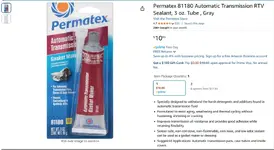
I bought the aftermarket filter, which came with a gasket. There was no gasket on the factory transmission pan, just sealant. I tried using the gasket, but wasn't happy with it, because as careful as I tried tightening down the pan evenly, the gasket would bulge out in several spots. Finally, I just took it off and then used Permatex Transmission Sealant, which worked great.
Note that the pan bolts are to be torqued at 12 ft/lbs. Be careful threading these in and not to use an impact wrench while reinstalling, as the aluminum block and threads strip very easily.
Best place I found for Mazda Transmission fluid price wise, was on www.mazdaswag.com. At $12.35 per quart. Did a fair amount of research, and despite using other aftermarket fluids, decided to spend the extra for the Mazda brand. 0000-FZ-113E-01 - Atf Type Fz - Mazda Swag
After draining, I had almost five quarts, which I refilled with. Note, checking on the level depends on the temperature of the fluid, which is marked on the dipstick.
Attachments
Just changed the fluid in my 2020 CX-9GT with 31k miles and let me tell you, it was disgusting,smelly and dark brown looking. I'd advise everyone to do this every 30k for sanity sake. Took me 1 hour going slow, drained 3.6 quarts and put same amount new Mazda blue oem fluid back in. Did this without warming up engine, just ambient temp. Will drive a couple hundred miles and drain and fill again. Bought 8 quarts for $120 shipped from med center mazda online.
Just do it!
Just do it!

- :
- Plano, Texas, USA
The only problem by doing this way is there’re plenty of reports that they found Mazda under-filled the ATF from factory. You could have under-filled the ATF if you put back in the same amount you’d drained. Follow the instruction and check the ATF level with the dipstick.⋯ drained 3.6 quarts and put same amount new Mazda blue oem fluid back in.
That is very true and I plan to do that when I drain and refill again in a couple hundred miles. I just wanted to get the old stuff out asap and replace the amount that was there but yes it could have been underfilled from the factory.The only problem by doing this way is there’re plenty of reports that they found Mazda under-filled the ATF from factory. You could have under-filled the ATF if you put back in the same amount you’d drained. Follow the instruction and check the ATF level with the dipstick.
- :
- Plano, Texas, USA
Actually once you confirmed that the ATF level is in the dot area of the dipstick by following the factory instruction, I imagine you can put back in the same amount you’d drained with no problems thereafter for the ATF drain-and-fill.That is very true and I plan to do that when I drain and refill again in a couple hundred miles. I just wanted to get the old stuff out asap and replace the amount that was there but yes it could have been underfilled from the factory.
^^^^Of course many use (free?) FORScan Lite to get ATF temperature readout.
View attachment 306753
View attachment 306754
2019 CX-5 Diesel Aftermarket Transmission Cooler
THIS
I see many here are spending hundreds of dollars for expensive scan tools that they won't be using every day.
Forscan works very well, but the mobile app is limited unless you pay for it. The Windows PC version works much better and has better features, but it's kludgy to use since you have to lug a laptop out to the car lol
That's because Forscan is an imitation (not a clone) of the M-MDS / Ford IDS software Mazda used to use at the dealer and still use in some iteration for late model Mazda up till the most recent couple of years.When I first researched this a couple of years ago, there were very few Mazda Skyactiv PIDs supported for the Torque Pro Android phone app. Strangely enough however, there was a free plug-in APK available for Android Torque Pro running under Windows on a PC (but not for phone Android at that time). That setup is extremely kludgy and slow, but it does support what I'd describe as a modest number of newer Mazda PIDs, and TFT (Transmission Fluid Temp) is included in that collection.
I used that Android Torque setup on the PC for a year or so, but then discovered that Forscan running under native Windows on a PC is light years ahead of Torque/Windows/Android, not only in the number of PIDs supported, but also in performance and functionality as well. Forscan is the clear winner in every respect, and very surprisingly, was avaliable as a free Windows download, when I installed it last year. However, the doc that I read at that time indicated that the beefy and free version that I downloaded (and am still using) was not available for Android phones. I believe that they also had a version available for Mac OSX, and something for PC Linux as well.
So that was the situation as of late last year, but I haven't checked since I did the download, and of course things might be quite a bit different today. The one caution I'll mention is I've seen a few ODB live data apps which incorrectly display ECT values as Trans Fluid Temp, in addition to ECT. The dead giveaway on this is when ECT and trans fluid temp are identical or very close to each other, during a cold start warm-up. The true TFT values should be quite a bit lower than ECT values for virtually the entire warm-up.
With a proper/good quality ELM327 adapter, you can do basically everything with it, including some hacks to change some software parameters on the car. I added i-DM to my 3 this way.
I also see many people are doing multiple drain and fills on top of buying the expensive (but convenient) scan tools. But why? That's wasteful and a waste of moneyIMO, going from the top side should be a better way to do this. Many had done that including OP and dodgerfan356 in post #107. I understand your 2.5T has more turbo plumbings then the 2.5L NA, but your CX-9 also has a bit bigger engine bay space then a CX-5. I believe you should be able to remove the entire air box then sway it away with air hose and wires connected may be without the bottom part of the air box. You can PM dodgerfan356 for some detailed instructions or photos how to access the dipstick from the top side as he just did it that way on his CX-9.
My another suggestion is since you’re going to go through the same process again to add some more ATF, and you can only drain the ATF for about a half of the total capacity, may be you should get another 5 ~ 6 bottles of Mazda ATF FZ with a new drain plug washer and do a second drain-and-fill after you drove your CX-9 for several hundred miles. Thus you‘d have about 75% of fresh ATF in your transmission which is better than your current 50%. Many do 3X drain-and-fills to get about 87.5% fresh ATF and call it a day.
If you really just want to top off your ATF, my estimation is you need about 0.3 ~ 0.5 quart, depending how much you’d refilled. For a gen-1 CX-5 from Kedis82ZE8’s report we usually need about 3.72 quarts to refill for a simple drain-and-fill, while the first drain from the factory fill is only 3.4 quarts. This means the factory fill is 0.32 quart too short.
Transmission fluid change without filter replacement
The total ATF capacity on automatic transmission for the 2.5T is slightly larger than the capacity on transmission for the gen-1 CX-5. So YMMV.
For the money spent, you're better off paying the dealer to do a proper flush for you, that way it's 100% new fluid. If you're smart like me, you'd buy 12 liters of Ravenol full synthetic ATF and have the dealer flush it so that it's all synthetic afterwards. Once and done. Anything else in the future will just be ONE drain and fill per interval, which has proven to work just fine on many cars. No need to change most or every bit of it, especially with synthetic
And I also see here most people don't even get the right red RTV sealant. Use F8AZ-19B508-AB red gasket maker from Ford or ThreeBond TB1207C
Dealers who drop the pan use a wirewheel machine to grind off the old sealant, and rotating buffing/scotchbrite pad for softer surfaces... nobody has time to waste an hour to scrape off and soak off old sealant... but I wouldn't bother dropping the pan if you changed the fluid early (the first time) and often enough after
Finally took care of this on my 2022 GS-L, 65,000 KM (40k ish miles). Was quite an exercise actually, but good to demystify the procedure. Took me about two hours going slow, probably could do it under an hour next time. It was a lot of up/down, sliding under the front of the car, so a bit physical, and awkward work area, but conceptually easy.
I like to be fully prepared, no surprises, so watched every video, read all these threads, but there were always bits missing, or people not checking fluid properly (or just saying how to do it, but always off camera, etc.).
Setup:
- Drove front up on ramps, jack up rear and slide second set of ramps under rear wheels
- Remove Splash Guard
- Remove bolt from dipstick and do all the checking from underside. (There are a chunky hoses in the way around dipstick on the CX-9 vs CX-5, so getting from underneath is easier (still awkward though).
- Verified fluid level on dipstick while w/ Forscan app on laptop (bought a compatible cable on Amazon for $30?) to monitor fluid temp. Car had been off for two hours at this point, and the fluid was at 58-60 deg C (140deg F) starting out. I'm not sure if 10 degrees would make much difference, but the fluid level about half-way. I know there is a lot of talk on here that they seem to be underfilled from the factory, but was not really the case for me. If it was underfilled, only very slightly.
- I was going to drain from the plug, but then remembered I had bought a cheap fluid extractor pump ($50 Amazon). It has measurements on the canister, so was nice see how much fluid came out. I pulled roughly 3.5 L of fluid. Fluid was dark, but still a nice tan colour (blue colour must fade away pretty quick) on a paper towel. Smelled fine.
- Pumped in 4L from underneath with one of those terrible orange hosed transfer pumps. Started car, cycled through the gears, and waited for TFT to come up to 50deg. The dipstick is tricky to read, but a few attemps, fluid was at the very top mark. Sucked out about 250ml and checked again. Read about 3/4 up the stick, and by this time, temps were about 55deg C, so I settled there.
To do again, I would have probably used a tad less, but I think well within the margin of error here, and compared to 90% of the videos on Youtube where people check with the car turned off, or just guessing what the temp is, I think i'm fairly close. I also don't know if I got more or less fluid out from using extraction pump vs drain plug. Maybe i'll compare next time, and do the whole pan/filter, etc.
** If I was to do again, I would do everything from above without jacking the car up, or removing the splash shield. I did experiment with removing the airbox housing. You can leave top of the air filter housing attached to throttle body + MAF, and bungee the air filter in place, and then bungee the box to the hood to keep it out of the way. Now you can get to the dipstick from above (still annoying), and also start/run the car up to temp. Would just need to rig up a long funnel, and you'd be set,
I like to be fully prepared, no surprises, so watched every video, read all these threads, but there were always bits missing, or people not checking fluid properly (or just saying how to do it, but always off camera, etc.).
Setup:
- Drove front up on ramps, jack up rear and slide second set of ramps under rear wheels
- Remove Splash Guard
- Remove bolt from dipstick and do all the checking from underside. (There are a chunky hoses in the way around dipstick on the CX-9 vs CX-5, so getting from underneath is easier (still awkward though).
- Verified fluid level on dipstick while w/ Forscan app on laptop (bought a compatible cable on Amazon for $30?) to monitor fluid temp. Car had been off for two hours at this point, and the fluid was at 58-60 deg C (140deg F) starting out. I'm not sure if 10 degrees would make much difference, but the fluid level about half-way. I know there is a lot of talk on here that they seem to be underfilled from the factory, but was not really the case for me. If it was underfilled, only very slightly.
- I was going to drain from the plug, but then remembered I had bought a cheap fluid extractor pump ($50 Amazon). It has measurements on the canister, so was nice see how much fluid came out. I pulled roughly 3.5 L of fluid. Fluid was dark, but still a nice tan colour (blue colour must fade away pretty quick) on a paper towel. Smelled fine.
- Pumped in 4L from underneath with one of those terrible orange hosed transfer pumps. Started car, cycled through the gears, and waited for TFT to come up to 50deg. The dipstick is tricky to read, but a few attemps, fluid was at the very top mark. Sucked out about 250ml and checked again. Read about 3/4 up the stick, and by this time, temps were about 55deg C, so I settled there.
To do again, I would have probably used a tad less, but I think well within the margin of error here, and compared to 90% of the videos on Youtube where people check with the car turned off, or just guessing what the temp is, I think i'm fairly close. I also don't know if I got more or less fluid out from using extraction pump vs drain plug. Maybe i'll compare next time, and do the whole pan/filter, etc.
** If I was to do again, I would do everything from above without jacking the car up, or removing the splash shield. I did experiment with removing the airbox housing. You can leave top of the air filter housing attached to throttle body + MAF, and bungee the air filter in place, and then bungee the box to the hood to keep it out of the way. Now you can get to the dipstick from above (still annoying), and also start/run the car up to temp. Would just need to rig up a long funnel, and you'd be set,
Last edited:
My recommendation on removing the ATF pan is before you even remove the fluid through the drain bolt, untighten all the ATF pan bolts , don't remove them , just untighten them then let the wight of the fluid help you break the bonding of the OEM gasket. Once this is done , then you can empty the fluid through the drain bolt and remove the pan
New Posts and Comments

- Replies
- 1
- Views
- 294
- Replies
- 9K
- Views
- 3M
- Replies
- 0
- Views
- 37