Selecting the Correct Polishes.
Using high quality polishes is important when machine polishing because we want to ensure that we remove the as little paint as possible, while removing the tops of the scratches in the most uniform manner. We want do this with out excessively scouring the paint's finish. A brief description of how polishes wok is in order. A polish is nothing more then abrasive material (aluminum oxide) held in a lubricated suspension. As the machine forces the pad to move against the paint (the movement is a function of the machine design) the abrasives are forced against the paint, removing microscopic amounts of paint. With traditional diminishing abrasive polishes the abrasives wear during the polishing cycle, becoming finer and finer, bringing the paint to a higher and higher luster. Newer, super micro abrasive polishes are already super refined and ultra fine to begin with. They do not break down or wear, but instead produce a very even cut through the time they are applied.
As a professional detailer, I carry almost 50 different polishes from many different manufactures in order to get the best possible shine and gloss on the paint. For novices, beginners, and enthusiasts, this would be overload. It is best stick with one brand of polish and one type of abrasive (diminishing or non-diminishing).
Menzerna's polishes are amongst the best traditional diminishing abrasives available.
Meguiar's has really changed the game with their newest super micro non-diminishing abrasives.
For machine polishing we are going to need
two separate polishes: A more aggressive polish for removing paint defects and swirls, and a fine polish used to remove any fine swirl marks caused by the first polish and finish out to a flawless car show shine. For the purpose of this thread I am going to focus on using
Meguiar's M105 and
M205 polishes to get the job down as I really feel they give safely give the enthusiast professional level results in the safest and more efficient manner possible.
Meguiar's M105 Ultra Cut Compound is an aggressive polish which features Meguiar's new non diminishing abrasives to quickly level and remove defects. The amount of correction this polish can is pretty amazing, even on a dual action polisher such as the Flex.
Meguiar's M205 Ultra Finishing Polish also features Meguiar's new non diminishing abrasives. It is a finer polish designed to remove any ultra fine swirls left behind by more aggressive polishing.
Selecting The Right Pads.
The correct polishes have to be matched the proper polishing pads to get the greatest effect. As with polishes, there are various grades of pads, some have more cut and leave behind micro swirls and some have less cut and burnish to a higher gloss. Polishing the swirls out of the Mazda's paint then refining to a better then new standard requires
two separate cuts of pad, similar to the two cuts of polish.
The
Orange Power Pad. This 6.5 inch, constant pressure pad, feature
Lake Country patented CCS and Constant pressure technology to provide a great moderate cut pad that will quickly level defects and create minimal swirl. Use this pad with [URL="http://properautocare.com/mem1ulcutco3.html"]Meguiar's M105 and a
Flex 3401 Dual Action to level the swirl outs of the paint while creating little to no marring.
The
White Polishing Pad. This 6.5 inch uses the same technologies as the Orange Power Pad, but uses a finer cut foam that makes it ideal for leaving behind a flawless finish. Use this pad with
Meguiar's M205 Ultra Finishing Polish and a
Flex 3401 Dual Action to remove any fine swirls from the previous step (or for removing ultra fine washing swirls, as sometimes this step is all that you will need) and burnish the paint to a super high gloss.
Selecting the Other Tools Needed.
In addition selecting the right
machine,
polishes, and
pads, a couple more items are necessary.
A pad brush: Use the pad brush to lightly scrub the face of the polishing pad (with the machine on) to remove dried polishing residue during the polishing process. When you polish the car you are removing paint, which will contaminate the polish and pad. I like to brush the pad after polishing every two sections.
High Quality Microfiber Polishing Clothes: You don't want to put more scratches and swirls in the paint when you wipe off the polishing residue from the paint. Use high quality microfiber cloths to remove the residue with out scratching, as nothing is more frustrating then polishing the paint to a high luster then scratching the paint immediately afterwards. Please do not ask me how I know!!!
Painter's Tape: It is always a good idea to tape up any black trim, edges, and body seams with a low tack tape. I like using 3M's low tack blue or green tapes.
Clay Bar Kit: Before polishing the paint it is ideal to clay the surface and remove any bonded containments from the paint's surface. If there is any contamination on the paint prior to polishing, it could sheer lose and become trapped between the pad and the paint, causing scratching.
Getting Started.
Tools needed:
A polisher (
Flex 3401 Dual Action Polisher)
Polishes (
Meguiar's M105 Ultra Cut Compound and
Meguiar's M205 Ultra Finishing Polish)
Pads (Orange Power Pads and White Polishing Pads)
Quality Microfiber ClothesA Pad Brush:
A Clay Bar Kit
Before polishing your Mazda's surface it has to be as clean as possible to avoid contaminating the polish or trapping grit between the pad and the paint. Wash the car very thoroughly to prevent adding any new swirls.
After washing use a detailing clay kit to remove any impurities and bonded contaminants from the paint's surface that the wash didn't remove.
Once the surface is completely clean and dry use painter's tape to mask off any seems and sharp edges.
The tape will create a barrier that prevents the polishes from staining dark plastics or damaging rubberized emblems.
Taping areas such as the headlight covers is a good idea as the abrasive polish could lightly haze the clear finish of the plastic
Taping up vents and areas where polishing dust would be very difficult to remove is also good.
In addition to black trim and badging, tape around the base of the convertible top, door handles, mirror bases, and sharp angles.
We are now ready to
test a spot of paint and polish it to our liking. All too often enthusiasts (and professionals!) will spend hours polishing a whole car, only to pull it out in the sunlight and find out that they are not happy with the results. Doing a
test spot will help us dial in a process so we can figure out what exact procedure is going to give us the best result possible, then stamp that process over the entire car. I like to tape off a rough square in the paint, about 18” by 18”, which is the around the optimal working section.
You should always start polishing with the least aggressive method possible. In our case, this would be
Meguair's M205 Ultra Finishing Polish using a
Lake Country White Polishing pad on the Flex.
When ever you are about to start polishing for the first time it is a good idea to 'prime' the dry pad. Meguiar's recommends using
M34 Final Inspection Quick Detail Spray for priming when using M105 or
M205.
M34 Final Inspection does not feature any silicones, waxes, polymers, oils, or gloss enhancers found in other quick detail sprays which could negatively effect the polishing process. Center the Flex's hook-and-loop backing plate over the backing of the pad and press firmly to secure. Give the dry pad a mist of
Meguiar's M34 to prime it.
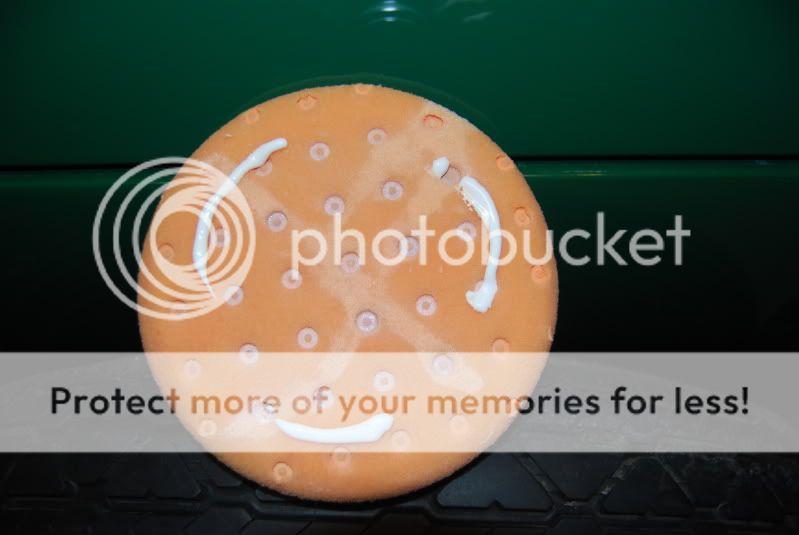
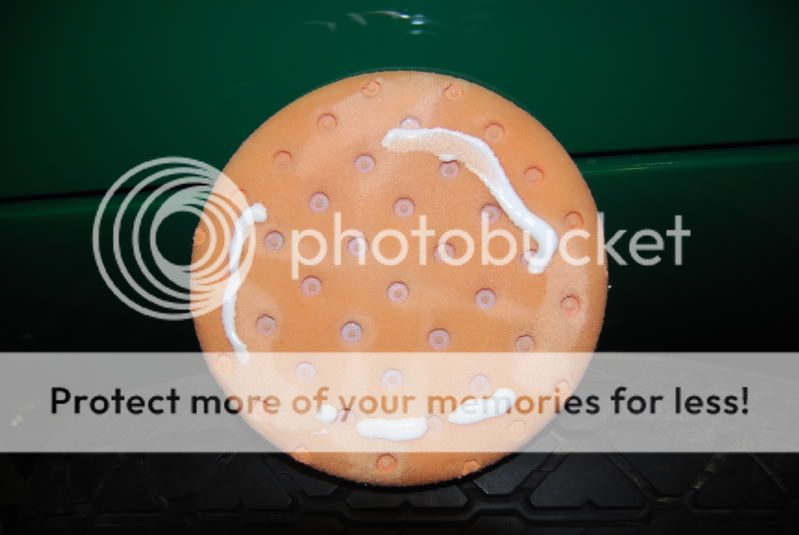
The first time you apply polish to the pad draw an X across the face. This is more polish then is necessary to on subsequent steps, but will ensure that the product is evenly distributed across the pad.
On random orbital and dual action polishers the polish will tend to migrate towards the center of the pad. Once the first section has been polisher, it is not necessary to re-prime with additional
M34 or too much polish. Three small lines around the outside, about as much material as one line across the face of the pad, is more then enough. Applying too much polish to the pad will over saturate the pours, increasing buff time an lessening results.
After every two applications I like to brush the pad on the machine before adding fresh polish. Once the pad is primed, three small lines, in alternating spots, is that is needed.
Polishing Technique
The four most common mistakes made when polishing with a dual action or random orbital polisher are moving too quickly across the paint, not using enough pressure on the machine, using too much polish, or polishing a section too quickly.
Arm Speed- Because both a Dual Action and a Random Orbital Polisher deliver most of the their cutting power from the oscillating movement of the pad, they require slow arm speed to allow the abrasives in the polish to work against the paint. Too often novices will move the machine far too quickly. With a Dual Action such as the Flex, move the pad about 2-3 inches per second. With a Random Orbital Polisher such as a Porter Cable 7242 or Meguiar's G100 1 inch per second is a little better.
Pressure- Again the Dual Action and Random Orbital Polisher require down force to get the best results and the most even cut. The weight over either machine applies about 5 lbs of down force on the head. In my experience with the Flex, adding an additional 5-10lbs of pressure will not only increase the action of the machine, but it will make the Flex easier to control. The Porter Cable requires an additional 10 to 15 lbs of pressure to get maximum benefit. If you are not sure how hard you are pressing use a bathroom scale and press down. 10-15 lbs of total pressure for the Flex or Makita Two Mode and about 5 lbs more for a Porter Cable 7242 or Meguiar's G110.
Polish Amount: As discussed previously, draw two lines across the pad to begin and about half that for additional sections. Adding too much polish will decrease the cut of the polish, weight down the machine, and make residue removal difficult. Clean the pad by brushing after every couple of sections. Over time the pad will begin to become saturated, at this point switch to a fresh pad. It can take 2-4 pads to properly remove swirl marks, and an additional 1-2 pads for final polishing.
Polishing Time Per Section- An 18” x 18” square is generally the ideal size to polish per application. Too large a section requires additional polish on the pad for coverage, decreasing efficiency, and makes it more difficult make sure all areas have been equally polished. When you polish you want to work in overlapping strokes, by about 50%. With slow arm speed, and a six inch pad (over lapping passes by 50%) it will take 6 strokes to cover the entire polishing section. Moving at 2 inches per second, it should take about 6 seconds to make each stroke (18 inches – 6 inches for the pad = 12 inches, divided by 2 inches per second= 6 seconds). So starting in the upper right corner and moving left, make one stroke across the paint, then make second stroke from left to right, overlapping the pass about 50%. After six strokes you should have covered the entire section (one pass) in about 36 seconds. Now make a pass (a series of strokes covering the same section) moving up and down, creating a cross hatch pattern. The goal in uniform material removal. This second pass will again take about 36 seconds. Repeat the horizontal and vertical passes one more time, then make a third pass over the paint in both directions reducing the pressure and moving with a slightly quicker arm speed. It should take about 2 minutes and 30 seconds per section (roughly).
With the commonly made mistakes in memory, lets get started. To recap the paint has been completely washed and clayed. All trim and edges have been taped, and the car is inside or in shade and the paint is cool to the touch. The pad has been primed with
M34 and a line has been drawn across the pad with
M205.
Now place the machine on the paint and drape the power cord over your shoulder to keep it from rubbing on the paint. The Flex has a speed dial that sets maximum power and a variable trigger which allows for percentages of the maximum to be controlled. For beginners a speed in the 3.5-4 range is plenty. As you grow more comfortable you may need want more power and find yourself polishing in the 5 or 6 ranges.
Get a comfortable grip on the bail handle and the trigger handle and squeeze the trigger half way with the pad flat on the paint. Quickly spread the paint over the section to be polished, then press the trigger completely and press down with an additional 5-10 lbs of pressure.
Work in slow, overlapping strokes, from the left to right and right to left, until the entire section has been polished. This is one pass. Now make a pass using up and down motions, steady pressure and slow arm speed. Focus on keeping even pressure and keeping the pad flat and moving slow, about 2 inches per second. Once you are back to your starting position, repeat the horizontal pass and vertical pass, again with overlapping strokes and slow arm speed. The film of polish on the paint should be begin to clear during these repeating passes. Now reduce pressure and increase arm speed, going over the section with two more passes (for a total of three in each direction).
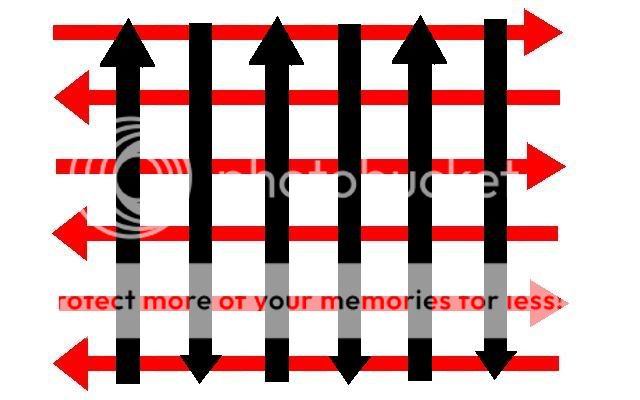
Note: A stroke is a movement from left to right, right to left, up to down, or down to up. A series of overlapping strokes that covers the entire section is known as a pass. Here is an illustrated picture of a pass, comprised of overlapping strokes from left to right and right to left.
To ensure uniform material removal, make the second pass in verticle motions. This cross hatching effect will make sure that area of the section is polished uniformaly. Here the second pass is going up and down.
Never polish dry. Always make sure a wet film remains on the paint to provide the pad from scouring the surface. Remove the residual film immediately with a clean microfiber polishing cloth such as a Dragon Fiber Perfect Shine Buffing Towel. Inspect the test section in direct sunlight and check to see if you got the results you where after. Chances are with the harder paint on the C5 and C6 Corvette's you will need the additional cutting power of Meguiar's M105 and the Orange Power Pad.
Attach the pad and prime the same as above. Using the same application techniques for
M205, repeat with
M105. Remove the residue and once again inspect the section in good light. Very deep swirl marks may require several applications with
M105 and the Orange Pad, and while it is possible to go more aggressive. Keep in mind that the finish left behind from the M105 and Power Pad my have very fine swirl marks know as microswirls or micromarring. Following with
M205 and a Power Pad will remove the residual marring and help create that flawless shine.
Once you dial in your system on the test section, simply repeat the process over the entire car, taking your time before each application on each section to make sure you are focusing on your technique and keep your pads clean. Trying to move too quickly will often result in the process taking more time. Some people like to polish an area of their car at a time, such as the hood, then the fender, then the door, etc. Other people like to polish the entire car with a process and section at time. Such as polishing section by section with
M105 over the entire car, then repeating if necessary, followed by final polishing the entire car a section at a time with
M205. The exact way you do it is going to depend on personal preference.
Remember to keep the basics in mind and always work clean. Use a clean microfiber towel to remove residue immediately after polishing a section before moving to an adjacent section. If the section you are about to polish has dust on it from residual, wipe clean with a spray of M34 Final Inspection and a clean microfiber cloth.
After Care.
So you have spent the day perfecting your paint, what's next? There will likely be polishing dust in the cracks, crevices, and trim pieces, so begin by washing the car. First removal all of the masking tape, then wash and dry carefully, being certain not to instill any new swirl marks or scratches. After drying you will want to add a couple coats of wax or sealant to protect the paint and keep it looking its best. Selecting a wax or sealant is a personal choice, although I have found nothing better then Blackfire Wet Diamond.
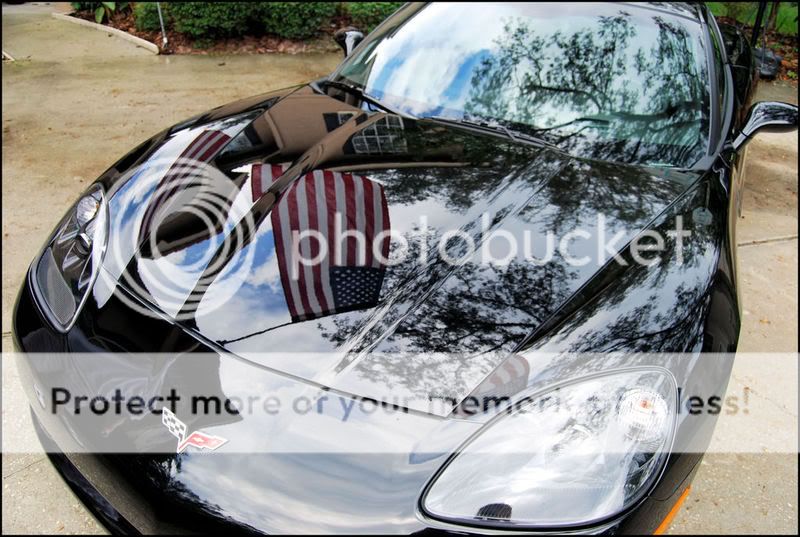
Here is one car that has it on.
After the paint is swirl free and re-leveled, proper washing techniques and frequent waxing will keep it looking its best. Over time some light marring might appear. However this marring will often be so shallow that it can be quickly removed with just a final polish. I hope this quick guide helps, as obviously there is so much to polishing that a book can be written on it and still barely scratch the surface .
[/FONT][/COLOR]