b.s. i am a painter by trade and workin in a body shop for most of my teenage life and even into my 20's now and i have seen plenty of hard hits like this one come and go! the car is just as good as it was before the collision! at a good shop measurements are takin to make sure the the frame is to factory specs! just because the car was in an accident doesnt mean its in bad shape! id say get it! figure out wich shop he took it to, see if it was a respectable shop and if it was talk him down on it!
To the OP, if you read my post you will see that I said you can get it close, but it will never be the same. I promise you that much. Many bodyshops will tell you it can be. But they are kidding themselves. Because of the brute strength necessary for frame strengthening, exact measurements are out the window. The best you can get is 'close'.
With a solid, round piece of rebar (using rebar since it is something most people know of) you can make cold bends to steel without compromising the tensile strength so long as those bends are gradual and do not kink or make a 90-degree bend. Outside of this application, you stand a big chance to greatly reduce the tensile strength of the steel by cold bending. Frame straightening is cold bending.
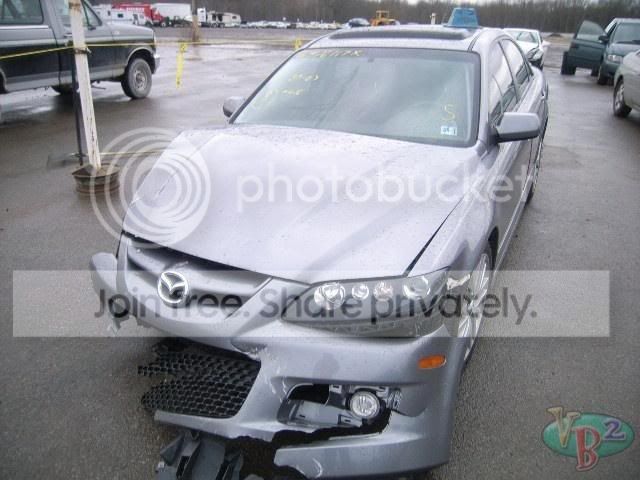
In a front-end collision like in these pictures, the frame and crash bar will take a majority of the impact. The crash bar is there to provide the greatest amount of impact surface area to dissipate the force of impact on. The crash bar is designed to make that point of impact a transferrable force to the frame. When force is transferred from the crash bar to the frame, the frame is designed to bend out and upward. They bend this way to change the direction of the forces from directly at the driver to away from the car. Crossmembers also aid this in giving the frame a reinforced point to make the necessary bend outward.
In every case of severe front impact, such as the one you've shown in the pictures, there will be some bending of the frame. While straightening the frame, they will likely have to work it several times over to get it 'close'. This will further weaken the tensile strength of the frame. You are better off staying way away from this. It would also be a good idea not to listen to ill-informed painters when it comes to metallurgy.
If you are a painter with spare time, or just interested in metallurgy, there are an abundance of resources in your local library or available online. Here are a couple of my favorites:
"The Metallurgy of Iron and Steel"
"To Bend or Not To Bend"
"The Physical Metallurgy of Steel"
"Steel Metallurgy for the Non-metallurgist"
"Ferrous Metallurgy"




 Too good to be true I guess...


