Signs of a Blown Head Gasket

Our beloved 2014 CX-5 has served us mighty well for many years. She's got 314k miles on her now and she's got her first major trouble. I'd appreciate some help on what troubleshooting to do next.

On my wife's way home she got a check engine light. I pulled the code and it is a P0304. Cylinder 4 missfire.

Here's what I did... Replaced Spark Plug, Coil and fuel injector. Same code. Checked with a spark tester and confirmed spark.

Engine runs slightly rough at idle, but seems to run fine above idle all the way up to highway speeds. No seeming loss of power or sputtering.

When I pull the wire harness going to each coil while the engine is running, most make a dramatic change to the engine, except #4, it changes a little, but doesn't really fall on its face.

The other symptom is that the car has been "using" more and more oil and coolant over the past year. Yet I never see any drips under the engine, and I don't see coolant coming out of the exhaust. But when I wipe the inside of the exhaust tip, my finger does come out very black. When my wife pulled in the other night with the check engine light, there was no oil on the dipstick.

So, my working theory at this point is that the Missfires is caused by low compression in the cylinder 4. The low compression is (hopefully) caused by a blown head gasket. Which would also explain the loss of coolant. As for where the oil is going, I'm not positive. I'm guessing it's going out with the coolant.

Oh yeah, the engine does not overheat.

My next move is to order a compression tester off of Amazon and get compression reading for each cylinder. If that confirms low compression I guess I'll pull the head and look for signs of a blown gasket.

Does this seem reasonable? Any other suggestions?
 
Solution
What a long terrible journey. Here's what it boiled down to. Bad injector. I could have sworn that I swapped injectors, but I guess I just wrote off injectors because the one on Cyl 4 was brand new from O'Reily's. I hadn't actually swapped them. When I took off the intake to inspect it I noticed that cyl 4 was still the new one. So, I swapped it with #2 and bingo, the misfires moved to 2. I'm VERY irritated with myself that I just wrote this off as a suspect assuming that a new injector would be good. Luckily I held onto my old injector that I took out. Popped it back in, and got a refund for the bad, new injector. No more misfires (knock on wood) for about 50 miles now.

Here's the thing though.... The whole reason I replaced that...
Here’s the real pat on the back. You now possess an intimate understanding of that SkyActiv engine that 99% of folks visiting here will never attain! :D
 
Upvote 0
WOW! Amazing the journey you took. Your engine has a fresh top end and timing chain. Many engines will run a long, long time with lower than ideal compression. It should be good to go for many more miles!

Did you take any pictures of the cylinder walls when the head was off? I'd be curious how they look at +300k mi. Is the low compression cylinder cylinder scored? Any pictures of the spark plugs now that it has 4 good injectors?

Is the cylinder that has the lowest compression the one that had the malfunctioning injector? Like it was running rich and washing the cylinder?

In my diesel world, guys run their engines with one cylinder down on compression for 100s of thousands of miles. Two of my friends have +430,000 and +500,000 miles with the engine in this condition. One tows 10,000 # trailer from TX to GA 5. In my race engine world, we are known to keep racing until after the season, knowing we have much lower compression in on cylinder, a broken piston or ring.

I'd drive it, like you are doing and monitor blow back and compare the low cylinder spark plug to the others after a 1,000 miles. Do you see any blue smoke out of the exhaust? Does it have to pass emissions testing?

At this point, I'd add 4 to 5 oz of Hot Shot Secret Stiction Eliminator to the oil. It was developed for Ford diesels to clean out the deposits between the pistons and rings. I put 1/2 quart in my 08 Honda oil and noticed performance increase, MPG, increase. I also used in my 280K mi Cummins diesel and notice it picked up power and MPG. I got my best ever fuel mileage after using this product, a few bolt on mods and adjusted my driving at 280,000 miles.

Running a compression and/or leak down test after running this product will tell if it helped. I use these tests and record the values to see if my race engine is changing.

I'll use this product on our CX5 at 30,000 miles because it's mostly used for short city trips. Clean out the deposits between the piston and rings.

Thank you for sharing your journey with us. Keep us updated!!
 
Upvote 0
WOW! Amazing the journey you took. Your engine has a fresh top end and timing chain. Many engines will run a long, long time with lower than ideal compression. It should be good to go for many more miles!

Did you take any pictures of the cylinder walls when the head was off? I'd be curious how they look at +300k mi. Is the low compression cylinder cylinder scored? Any pictures of the spark plugs now that it has 4 good injectors?

Is the cylinder that has the lowest compression the one that had the malfunctioning injector? Like it was running rich and washing the cylinder?

In my diesel world, guys run their engines with one cylinder down on compression for 100s of thousands of miles. Two of my friends have +430,000 and +500,000 miles with the engine in this condition. One tows 10,000 # trailer from TX to GA 5. In my race engine world, we are known to keep racing until after the season, knowing we have much lower compression in on cylinder, a broken piston or ring.

I'd drive it, like you are doing and monitor blow back and compare the low cylinder spark plug to the others after a 1,000 miles. Do you see any blue smoke out of the exhaust? Does it have to pass emissions testing?

At this point, I'd add 4 to 5 oz of Hot Shot Secret Stiction Eliminator to the oil. It was developed for Ford diesels to clean out the deposits between the pistons and rings. I put 1/2 quart in my 08 Honda oil and noticed performance increase, MPG, increase. I also used in my 280K mi Cummins diesel and notice it picked up power and MPG. I got my best ever fuel mileage after using this product, a few bolt on mods and adjusted my driving at 280,000 miles.

Running a compression and/or leak down test after running this product will tell if it helped. I use these tests and record the values to see if my race engine is changing.

I'll use this product on our CX5 at 30,000 miles because it's mostly used for short city trips. Clean out the deposits between the piston and rings.

Thank you for sharing your journey with us. Keep us updated!!

I used to put STP high mileage additive into my 2.5, back when it was on 0w20. The vehicle has been in my family since new and used to consume some oil.

One day, I noticed that it did not consume oil anymore. I recently realized it must have been due to the high mileage oil treatment I used.

To this day at over 350k km and tuned for 91 octane, the engine consumes zero oil in between OCI intervals. I regularly go WOT to 5k rpm, but the rest of the time I pretty much never rev past 3k and am easy on the engine.
 
Upvote 0
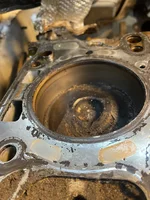
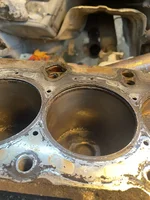
Thanks I did take pictures of the cylinder walls. I didn't see any bad scoring, but there was no cross-hatching left that I could see. #2 had some vertical scoring, but nothing that would catch my fingernail. I'll attach some to this post. I did clean up the pistons before reassembly.

Thankfully no, I do not have to pass emissions, and something I noticed was there was a lot (IMHO) of oil from the PCV to the intake. I I could a streak of oil down the intake runners on cyl #1 and #4. Not sure why just those two. But it was worse on #4, likely because the hose connecting the PCV to the intake attaches closest to #4. I think that might have been contributing to heavy deposits on the plug on #4. So I plugged the port on the intake manifold and ran the PCV to a catch can. Going to run that setup for a while and check the plugs to see if that helps.

After 500 or 1000 miles I'll post an update with a report on plugs, compression and such.
#1 - cyl1.webp
#2 - cyl2.webp
#3 - cyl3.webp
#4 -cyl4_1.webp
#4 - cyl4_2.webp
 
Upvote 0
Showing my lack of knowledge of Skyactiv, piston bowles are like diesel pistons. No valve reliefs either.

Agree, the deposits on #4 look like from the PVC...ugh. We use to remove the PVC on our domestics and put the oil to a catch can. I've seen some threads of guys putting a catch can inline with the PVC hose. I'm warming to the idea after seeing these pics!

Can you idle the engine with the pvc hose disconnected a bit and observe the engine blow by. It might not mean much unless we can find a newer engine to compare. Again, just information, not a show stopper....

Other than owning or having borrowed the instruments to measure how in round the cylinders, it all looks normal.

LMK if you try some HSS Stiction Elimination!
 
Upvote 0
I used to put STP high mileage additive into my 2.5, back when it was on 0w20. The vehicle has been in my family since new and used to consume some oil.

One day, I noticed that it did not consume oil anymore. I recently realized it must have been due to the high mileage oil treatment I used.

To this day at over 350k km and tuned for 91 octane, the engine consumes zero oil in between OCI intervals. I regularly go WOT to 5k rpm, but the rest of the time I pretty much never rev past 3k and am easy on the engine.
HSS Stiction Elimination is a different treatment for dissolving the deposits that make the rings stick to the pistons and clean up the oil passages in the block and to the turbo.

I run 10w20 in my 900 HP, 8000 RPM, push rod race engine. The clearances were set to run a lighter oil. I'm trusting that Mazda set the clearances for the oil they spec. It's mostly spec the bearing clearances tighter. At 8000 RPM we loose about 5 HP over the heavier oils to to pumping and ring flutter. That said, it may not be measurable in our much lower RPM Skyactivs...
 
Upvote 0
HSS Stiction Elimination is a different treatment for dissolving the deposits that make the rings stick to the pistons and clean up the oil passages in the block and to the turbo.

I run 10w20 in my 900 HP, 8000 RPM, push rod race engine. The clearances were set to run a lighter oil. I'm trusting that Mazda set the clearances for the oil they spec. It's mostly spec the bearing clearances tighter. At 8000 RPM we loose about 5 HP over the heavier oils to to pumping and ring flutter. That said, it may not be measurable in our much lower RPM Skyactivs...
With your turbo engine, 5w30 is good.

For 0w20 on the NA, while I would argue its technically within range as far as clearances go, I don't think it's optimal for real world conditions, particular under high engine load and hot summer weather.
 
Upvote 0
In my research I uncovered too many negative outcomes with a catch can on Skyactivs, so I will skip it.

I think at that mileage, for most people I would recommend replacing the air/oil separator, doing a walnut blasting of the intake runners, valves, and pistons, and a few rounds of Restore and Protect.
 
Upvote 0
In my research I uncovered too many negative outcomes with a catch can on Skyactivs, so I will skip it.

I think at that mileage, for most people I would recommend replacing the air/oil separator, doing a walnut blasting of the intake runners, valves, and pistons, and a few rounds of Restore and Protect.
Enlighten us a few of the issues..?
 
Upvote 0
Enlighten us a few of the issues..?
One or two involved a really stinky garage every time they parked the car.

One or two developed an oil leak, I believe the rear main seal due to crankcase pressure.

And in all cases, the catch can wasn't really catching much.
 
Upvote 0
I'm doing the catch can really as a test. I didn't like seeing how much oil was in the intake, so I'm just going to run this for a while to see how much I catch. Probably won't run it long term. But I don't have a garage to park in, I don't see how venting to a catch can rather than the intake would cause a rear seal leak. The crankcase pressure is still being released. In my case I have a hose going to a Gatorade bottle! So I'm not going to a airtight sealed container.
 
Upvote 0
In my research I uncovered too many negative outcomes with a catch can on Skyactivs, so I will skip it.

I think at that mileage, for most people I would recommend replacing the air/oil separator, doing a walnut blasting of the intake runners, valves, and pistons, and a few rounds of Restore and Protect.
I have a 153k miles on my CX-5 now. Wondering about the walnut blasting. Do you have to go to some kind of special shop to get that kind of service done, or?
 
Upvote 0
Back