
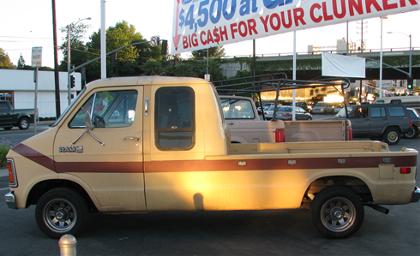
Is 200,000 on your car's odometer the new 100,000 miles? it was an interesting question posed this week by AOL Autos' writer Gary Hoffman. Here is what he writes:
The dream of putting 200,000 miles on your vehicle once restricted to an assortment of auto buffs and non-conformists willing to spend a small fortune on repairs -- is fast becoming a real possibility for millions of drivers..
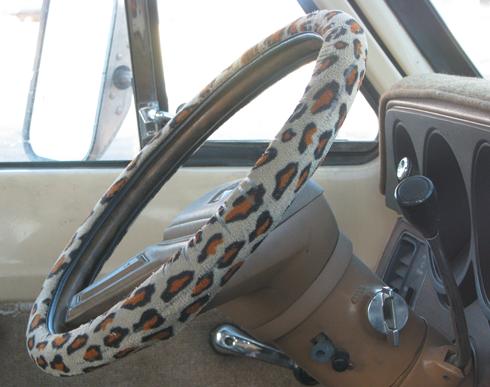
This old Dodge van even carried its funky looks to the interior
Not so long ago, people counted themselves lucky if their car made it 100,000 miles before it gave out. As late as the 1980s and 1990s, many odometers didn't even carry enough digits to handle 100k.
But to echo the hopeful baby boomer assertion that 60 is the new 40, one could say that 200,000 miles is the new 100,000 thanks primarily to improvements in quality.
Consumers are embracing the idea if the statistical studies and the growing number of "high mileage" car clubs around the country are any indication:
One of the groups, the Allpar 200,000 Club, boasts 4,000 members. They consider it a point of pride to be able drive Chrysler products with more than 200,000 miles on them.
Last year, the "Cash for Clunkers" program, designed to boost auto sales and get gas-guzzling vehicles off the road, showed just how high the age of cars, trucks and SUVs has risen. The typical vehicle turned in under the program last year was 14 years old and averaged 160,000 miles, according to the National Highway Traffic Safety Administration (NHTSA).
Since it took a bonus of $3,500 to $4,500 to persuade owners to turn these vehicles in, thousands of them would likely still be on the road and accumulating mileage if they hadn't been scrapped. Outside the bonus program, the average age of scrapped vehicles lately has been nearly as high as the "clunkers'" -- about 13 years, according to the U.S. Department of Transportation.
To some extent, tough economic conditions are leading consumers to hang onto their cars longer, said Lonnie Miller, vice president for marketing and industry analysis at R. L. Polk & Co., a publisher of automotive data. "People are cooling their jets on buying new vehicles."
But the trend was underway well before the last downturn. Average vehicle age has climbed steadily for a decade, Miller notes, going from 8.8 years in 1999 to 10.6 years late last year.
He believes longer warranties and financing contracts are two key factors behind the trend, along with the higher vehicle quality.
The longer life spans could be just the beginning. Many of the "clunkers" turned in for scrapping last year were manufactured in the mid-1990s. Experts expect longer life spans from the technologically advanced cars sold today.
Studies by J.D. Power & Associates, a consumer and product research firm, do suggest that cars are being built to last longer, Miller noted. In its latest dependability report, the firm said that overall performance of vehicles after three years of ownership was "at an all-time high."
Between 2003 and 2010, average number of problems per 100 vehicles plummeted from 355 to 155 industry-wide, according to the company. Twenty-five of the 36 brands in the study showed improvement.


