Grounding Cylinder Head Test Results (2024 CX-5 Turbo)

A General Warning to the Community from the Moderators

From this point onwards, inflammatory comments that don't contribute anything to the discussion will be deleted without warning. There's been a lot of that in this thread already.

If you have nothing constructive to add, please refrain from posting.


  • d ) The act of intentionally posting inflammatory threads or replies for no other purpose than inciting or provoking others, also known as "trolling", is strictly prohibited. Mazdas247 has a zero tolerance policy towards trolling, meaning users who engage in such activity can be immediately and permanently banned without warning.

 
2.5L gets up to 30 on highway and up to 28 combined. What did @CrazyHippie get before as a baseline? Claiming 29-30 after grounding isn't a step above the estimation. Unless that's your city mpg.
 
I was thinking it might be a good idea to take a look at some schematics to see where some grounds could be added for the modules, etc.
I don't have an auto transmission but there are other things that could probably use some upgrades.
Start with grounds on the engine cylinder head as outlined in this post.

Full disclosure, I grounded the throttle body on our turbo, zero amps through this ground. I don't recommend grounding the TB..
 
Start with grounds on the engine cylinder head as outlined in this post.

Full disclosure, I grounded the throttle body on our turbo, zero amps through this ground. I don't recommend grounding the TB..
So In post 4 you say you got equal results grounding the tb but now you say not to. Did i miss read it? I’m headed to find some ground wire so get two just one?
 
do you have some photos and what gauge wire? I have some 8 gauge but thinking 4g would be better.
See post 172 in this thread for a photo of the point near the throttle body. The other point is on the right fender where a factory grounding point exists.

I use 8 ga, 4 ga couldn't hurt.
 
See post 172 in this thread for a photo of the point near the throttle body. The other point is on the right fender where a factory grounding point exists.

I use 8 ga, 4 ga couldn't hurt.
thanks, I am still curious about @AL Cx5 post saying he did not recommend grounding the TB when first saying it provided equal results I will be adding at least the cylinder head ground, but why did he change his opinion on the TB grounding.
 
thanks, I am still curious about @AL Cx5 post saying he did not recommend grounding the TB when first saying it provided equal results I will be adding at least the cylinder head ground, but why did he change his opinion on the TB grounding.
I have grounded TBs on other cars, Domestic and imports and measured currant and better throttle response. On our turbo TB ground no currant measured. NA might be different. I left the ground on the TB for now.

Maybe a NA guy will ground his TB and report.
 
@AL Cx5 is there any reason not to ground here instead of the valve cover bolt? I used an 8AWG wire. thanks
tempImagekkWcYO.webp
 
@AL Cx5 is there any reason not to ground here instead of the valve cover bolt? I used an 8AWG wire. thanks
View attachment 382807
As long as you detect amperage going through the ground you are fine. I'll pop the hood in the AM and find where you landed it on the engine. The idea is to get a clear ground path for the injectors and coils. So it's important to ground to the cylinder head.

As mentioned before, on our race engine, Gen 3 Hemi, we are putting 150 mJ x 2 or 300 mJ to each cylinder. It has 16 massive coils. Per the wiring instructions, we ground each bank of 4 cylinders to the head they are wired. Then we run two large grounds to the battery ground terminal. The coils charge and the ground releases the energy to the spark plug. We run a 16v lithium battery that helps the coils charge quicker and the injectors open in close quicker. It would be interesting to up our cars to 16V and see if there are any gains. Then it would need a 16v alt. I don't need another research project...

Our car coils put out max 50 mJ. Which is plenty. Point is we have to ground the race engine coils to the heads and battery and this process helps our street cars too. Grounding directly to the battery would and the head is ideal. Ours is like that. One ground to the body and the other lands on a ground wire to the battery terminal.

Grounding at the cylinder head helps our 50mJ coils discharge quicker and with more power.

Taking this one step further, we might see some gains by increasing the dwell time on our engines. I'll take a look at Mazda Edit and look for dwell tables. For me, I would only want to increase dwell at partial throttle areas as a daily driver. Maybe pick up a few HP and most important to me, improve gas mileage. I been in the weeds as of late optimizing dwell on the Hemi.

Lastly, we could play with Injector Angle, where the injector pulse fuel base on intake valve timing. I'll assume Mazda has set both dwell and injector angle to optimize lower emissions and efficiency second. This might be another area to mine or maybe I'm late to the party and the tuners have figured all of this out.
 
As long as you detect amperage going through the ground you are fine. I'll pop the hood in the AM and find where you landed it on the engine. The idea is to get a clear ground path for the injectors and coils. So it's important to ground to the cylinder head.

As mentioned before, on our race engine, Gen 3 Hemi, we are putting 150 mJ x 2 or 300 mJ to each cylinder. It has 16 massive coils. Per the wiring instructions, we ground each bank of 4 cylinders to the head they are wired. Then we run two large grounds to the battery ground terminal. The coils charge and the ground releases the energy to the spark plug. We run a 16v lithium battery that helps the coils charge quicker and the injectors open in close quicker. It would be interesting to up our cars to 16V and see if there are any gains. Then it would need a 16v alt. I don't need another research project...

Our car coils put out max 50 mJ. Which is plenty. Point is we have to ground the race engine coils to the heads and battery and this process helps our street cars too. Grounding directly to the battery would and the head is ideal. Ours is like that. One ground to the body and the other lands on a ground wire to the battery terminal.

Grounding at the cylinder head helps our 50mJ coils discharge quicker and with more power.

Taking this one step further, we might see some gains by increasing the dwell time on our engines. I'll take a look at Mazda Edit and look for dwell tables. For me, I would only want to increase dwell at partial throttle areas as a daily driver. Maybe pick up a few HP and most important to me, improve gas mileage. I been in the weeds as of late optimizing dwell on the Hemi.

Lastly, we could play with Injector Angle, where the injector pulse fuel base on intake valve timing. I'll assume Mazda has set both dwell and injector angle to optimize lower emissions and efficiency second. This might be another area to mine or maybe I'm late to the party and the tuners have figured all of this out.
it is a motor mount (engine mount #3) and just ran a nut on one of the studs but not sure how much it ultimately grounds to the head. My cheapo multimeter shows a small amount of amps if I hold a probe on the stud/nut and then on the body bolt. not much tho.
 
it is a motor mount (engine mount #3) and just ran a nut on one of the studs but not sure how much it ultimately grounds to the head. My cheapo multimeter shows a small amount of amps if I hold a probe on the stud/nut and then on the body bolt. not much tho.
I'll have a look, an inexpensive clamp multimeter is the only way I've measure what kind of load without breaking the circuit to use a standard multimeter. I use this device fairly often. The price of these devices have come way down. They were made popular for solar panels and such.

Some are just $20 that MIGHT work. Buyer beware.

I have this inexpensive unit below and a Fluke probe type. This China clamp meter is about 8 years old. I've used it trouble shooting 3 phase AC to small DC systems.

https://www.amazon.com (commissions earned)
 
I'll have a look, an inexpensive clamp multimeter is the only way I've measure what kind of load without breaking the circuit to use a standard multimeter. I use this device fairly often. The price of these devices have come way down. They were made popular for solar panels and such.

Some are just $20 that MIGHT work. Buyer beware.

I have this inexpensive unit below and a Fluke probe type. This China clamp meter is about 8 years old. I've used it trouble shooting 3 phase AC to small DC systems.

https://www.amazon.com (commissions earned)
does it look to you like the motor mount stud would be close enough/connected enough to the head to be benificial?
 
I'll have a look, an inexpensive clamp multimeter is the only way I've measure what kind of load without breaking the circuit to use a standard multimeter. I use this device fairly often. The price of these devices have come way down. They were made popular for solar panels and such.

Some are just $20 that MIGHT work. Buyer beware.

I have this inexpensive unit below and a Fluke probe type. This China clamp meter is about 8 years old. I've used it trouble shooting 3 phase AC to small DC systems.

https://www.amazon.com (commissions earned)
This is the clamp meter I have. It's pretty sensitive and smaller than some but doesn't have a bigger ,brighter display that other brands offer and is limited to 100 amps (which is fine for my uses). I got it because OWON is a real instrument company and feel it would give better reliability and accuracy than the brands with unpronounceable names. Also cheaper than the Uni-T 210e but nothing wrong with Uni -T as I have their DMM and digital tachometer. Owon also has this meter (CM2100) that is Blutooth enabled. There's lots of clamp meters out there to choose from.

 
I'm happy for for you that you made the effort to improve you CX 5 fuel mileage and response!

I looked at the motor mount. This would not be my 1st choice. It's just a few more inches to the valve cover bolt. We know this follows the tried and proven spot.

Clamp on amp meter is needed to confirm the location or do an A to B test, log engine load or drive the same route on cc with and without the ground attached. Not hand Calculated mpg. The LOM, lie o meter, is good on our Mazdas but still of 1 to 2 mpg. Need to drive at least 100 miles on the same route to confirm.

I did the engine load test on our rides and it confirmed the grounds work. On my truck I did the same. And on a long trip picked a section of interstate to drive 125 miles. Ran it north and south. Filling up at the same stations. Did it a 3rd time 6 months later and got better MPG because I fixed a small fuel leak! This is tedious but folks understand mpg more than % engine load...

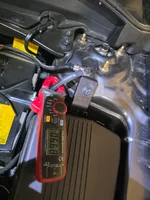
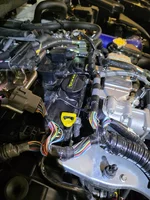
Here are some pics from today. Throttle body was only .4 amps. It might still help with Throttle response. I haven't done any A to B tests. For now, all my efforts are going into my drag car..

Notice I landed one ground to the battery ground and another to the chassis. This is like our race car setup.

1st pic, drivers side ground to battery ground
2nd, Amps on the passenger side ground
3rd, Amps on the throttle body ground
4th, drivers side ground on top of the factory tiny grounds
5th, passenger side ground landed on the valve cover bolt by the oil dip stick

20260425_114126.webp
20260425_114210.webp
20260425_114433.webp
20260425_113716.webp
20260425_113629.webp
 

Attachments

  • 20260425_114126.webp
    20260425_114126.webp
    138.2 KB · Views: 13
  • 20260425_114210.webp
    20260425_114210.webp
    123.3 KB · Views: 11
  • 20260425_113629.webp
    20260425_113629.webp
    171.8 KB · Views: 12
Last edited:
This is the clamp meter I have. It's pretty sensitive and smaller than some but doesn't have a bigger ,brighter display that other brands offer and is limited to 100 amps (which is fine for my uses). I got it because OWON is a real instrument company and feel it would give better reliability and accuracy than the brands with unpronounceable names. Also cheaper than the Uni-T 210e but nothing wrong with Uni -T as I have their DMM and digital tachometer. Owon also has this meter (CM2100) that is Blutooth enabled. There's lots of clamp meters out there to choose from.

thanks, I went ahead and ordered one.
 
thanks, I went ahead and ordered one.
Great. I hope it works for you. I got it because it seemed like a decent unit for only about $10-15 more than the XYZ brands. Anyway, I don't know your experience with electrical matters but this is my first clamp meter whose purchase was inspired by AL Cx5's interesting posts here and my curiosity. And I always found it a hassle to rig up something when trying to measure current especially with AC where the lines must be separated. DC current was easier to hook meter in series.
So anyway, I want to mention that I also purchased this line splitter to enable easy AC current measurement. Now I know how much current my refrigerator, electric drill, bench grinder and other stuff pulls. LOL. It also checks outlets and GFI. There's also holes for meter probes to measure voltage while measuring current. It feels solid and made by/for a company whose been in the electrical business for a long time. Just another useful toy to accompany the OWON. I have no affiliation with Amazon or other companies. Just thought it may be useful info for you or other members. Great price on Amazon also.
 
Back